


Conservation
The African Wild Dog
With only 6,500 African Wild Dogs remaining across the continent, and just 450 in South Africa, the survival of the species depends on sustained, hands-on effort. We are proud to be at the forefront of that through our longstanding partnerships with the Endangered Wildlife Trust (EWT) and the Painted Wolf Foundation.
Besides direct donations, we take an active role in advocacy, through sponsoring conservation fundraisers with our wines, working with partners on immersive and educational events and championing the protection of the African Wild Dog.
This deep, hands-on commitment has earned us real credibility within the conservation world. Every glass of Painted Wolf carries that legacy forward.
The African Wild Dog is listed as Endangered on the IUCN Red List of Threatened Species. Habitat loss, disease, competition with other predators and the struggle to coexist with ever-expanding human populations have decimated numbers throughout Africa.

We have been supporters of and partners to the EWT for many years, with primary focus on their Wild Dog Range Expansion Project, which aims to reverse the decline in Painted Wolf numbers and expand their range throughout Southern Africa

We support the Painted Wolf Foundation, founded in 2018 by Nicholas Dyer, Peter Blinston, and the late Diane Skinner. The foundation is dedicated to protecting endangered African wild dogs through conservation, awareness, and on-the-ground initiatives.
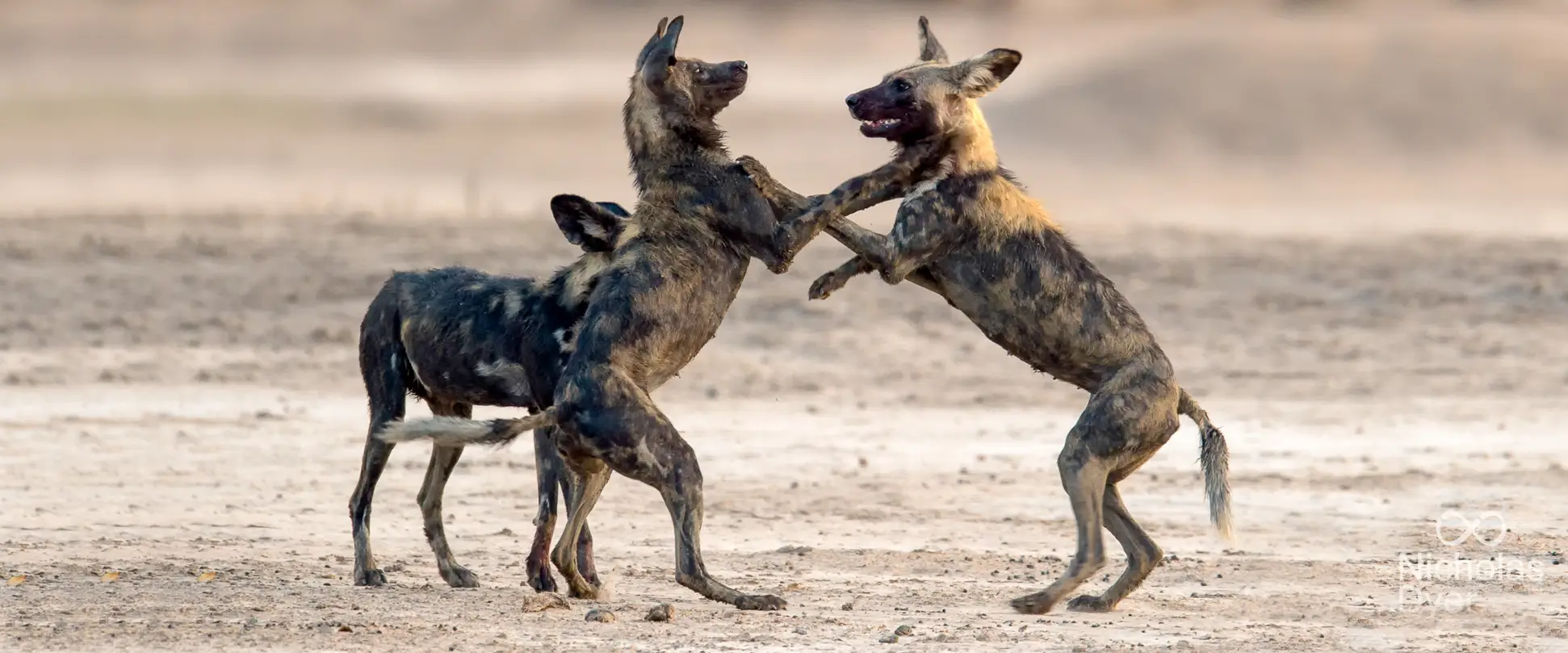
The species goes by several names in English alone: African wild dog (the most common), Cape hunting dog, painted hunting dog, painted dog, tri-coloured dog, and Painted Wolf — a name that gained ground after the BBC’s documentary Dynasties in 2018.
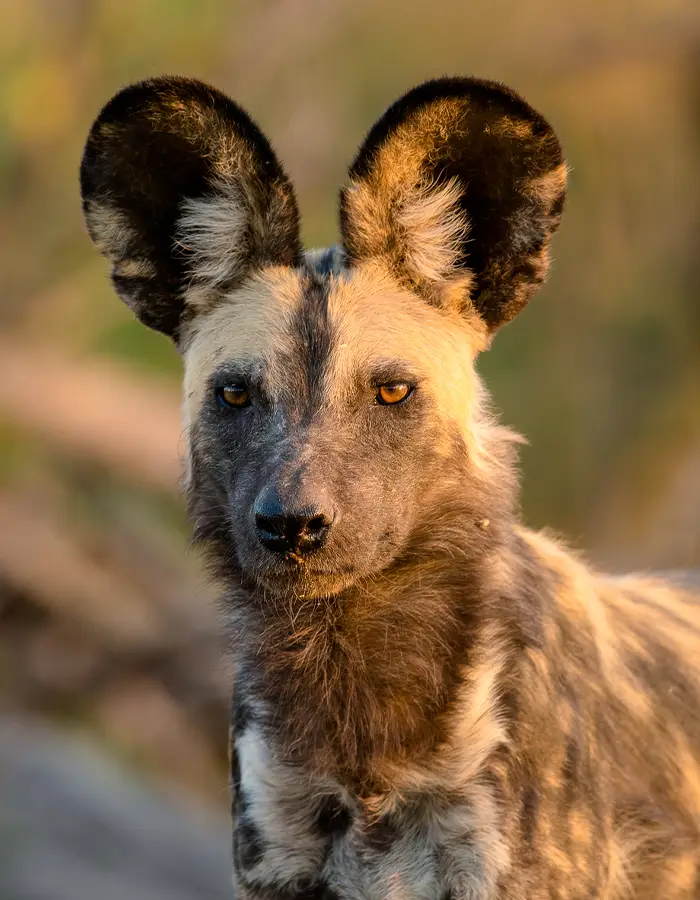
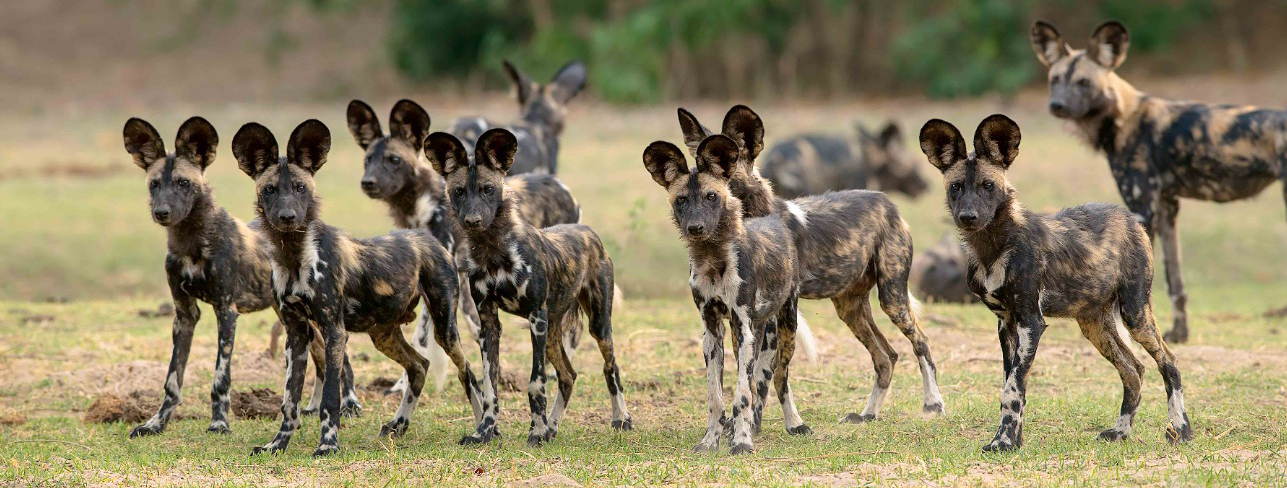
Lycaon pictus - Painted Wolf - is a fitting name: every animal’s coat is a unique, asymmetrical patchwork of black, brown, gold, and white, no two alike. Pups are born dark and grow into their markings, and most keep a distinctive white flash at the tip of the tail.
They’re built for endurance rather than raw speed, though they have plenty of both. Their large, rounded “Mickey Mouse” ears aren’t just for hearing approaching danger or catching a pack member’s call from a distance — they help regulate body temperature in the heat, too. Look at the feet and you’ll spot another quirk: painted wolves have four toes rather than the five, with a dew claw, that most other dogs have.
Despite the name, they’re not close cousins of domestic dogs or wolves. They’re the only surviving species in the genus Lycaon — a distinct evolutionary line found nowhere else in the animal kingdom.
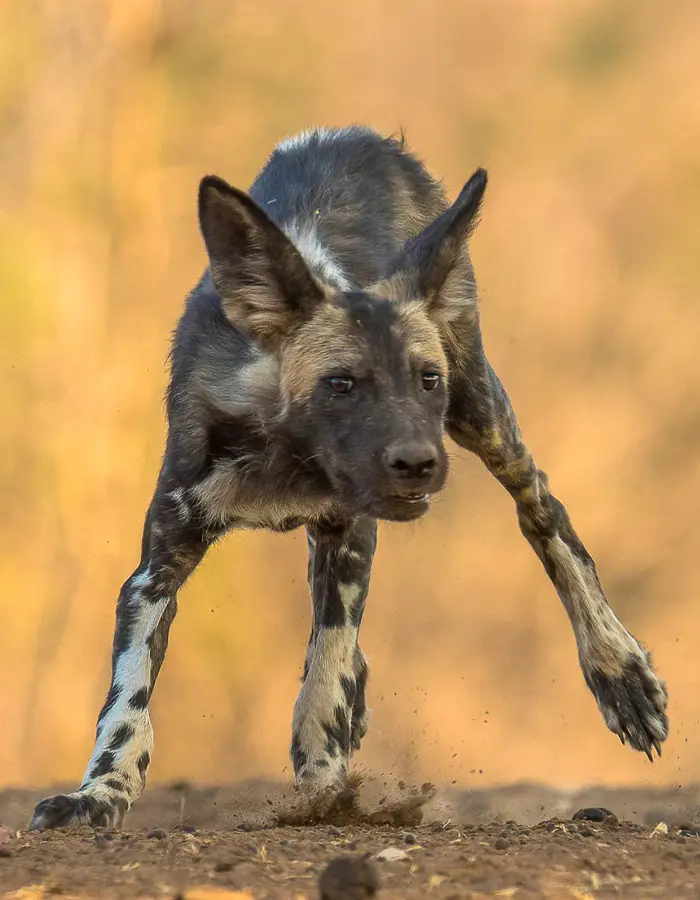
20 - 30kg
ADULT WEIGHT
75cm
SHOULDER HEIGHT
60 - 70 km/h
OVER 3-4KM
Pack Life
Family is the organising principle of a Painted Wolf’s life. Packs are led by an alpha female and alpha male; she’s the only one who gives birth, and she calls the shots on when and where the pack hunts or dens. Packs range from just two animals to over thirty, though around ten is typical, and a pack generally needs four to six members to raise pups successfully.
Before a hunt, the pack performs a “greeting ceremony” - a burst of excited noise and physical affection, even though they’ve been lying next to each other all day. They’re vocal animals too, using barks, twitters, and “hoo-calls” alongside body language to coordinate.
They look after their own: an injured or sick pack member is fed by others returning from a hunt, and wounds are cleaned by licking. Even outside the pack, painted wolves have struck up an unlikely alliance with vultures, which clean up around dens in exchange for an easy meal.
Hunting itself is a group effort with a high success rate for a large predator - well above lions’, for example - thanks to stamina, sustained speed, and pack coordination that scientists still don’t fully understand.
There’s no verified record of an African wild dog ever attacking a human.
Threats to the African Wild Dog
Painted wolves are among Africa’s most endangered large carnivores. The pressures come from several directions at once.
Habitat loss and fragmentation
Painted wolves need large territories, often ranging well outside protected reserves. As land is carved up for farming and settlement, packs are squeezed into smaller areas.
Disease
Rabies can wipe out an entire pack in weeks. Canine distemper and anthrax are less well understood but similarly dangerous. Most of these diseases originate in unvaccinated domestic dog populations, which is why community engagement — not just wildlife management — is an essential part of the conservation response.
Snares and persecution
Wire snares set for other bushmeat species catch painted wolves indiscriminately, and the animals have historically been shot or poisoned as perceived threats to livestock, despite livestock predation being rare outside areas where wild prey has collapsed.
Roads
In areas crossed by fast, well-used roads, collisions can account for a significant share of painted wolf deaths.
Competition
Lions and hyenas compete for the same prey as the African wild dog. As Africa’s wildlife becomes more confined to protected areas, this competition for shrinking space is a growing long-term problem, not just an immediate one.
The Numbers
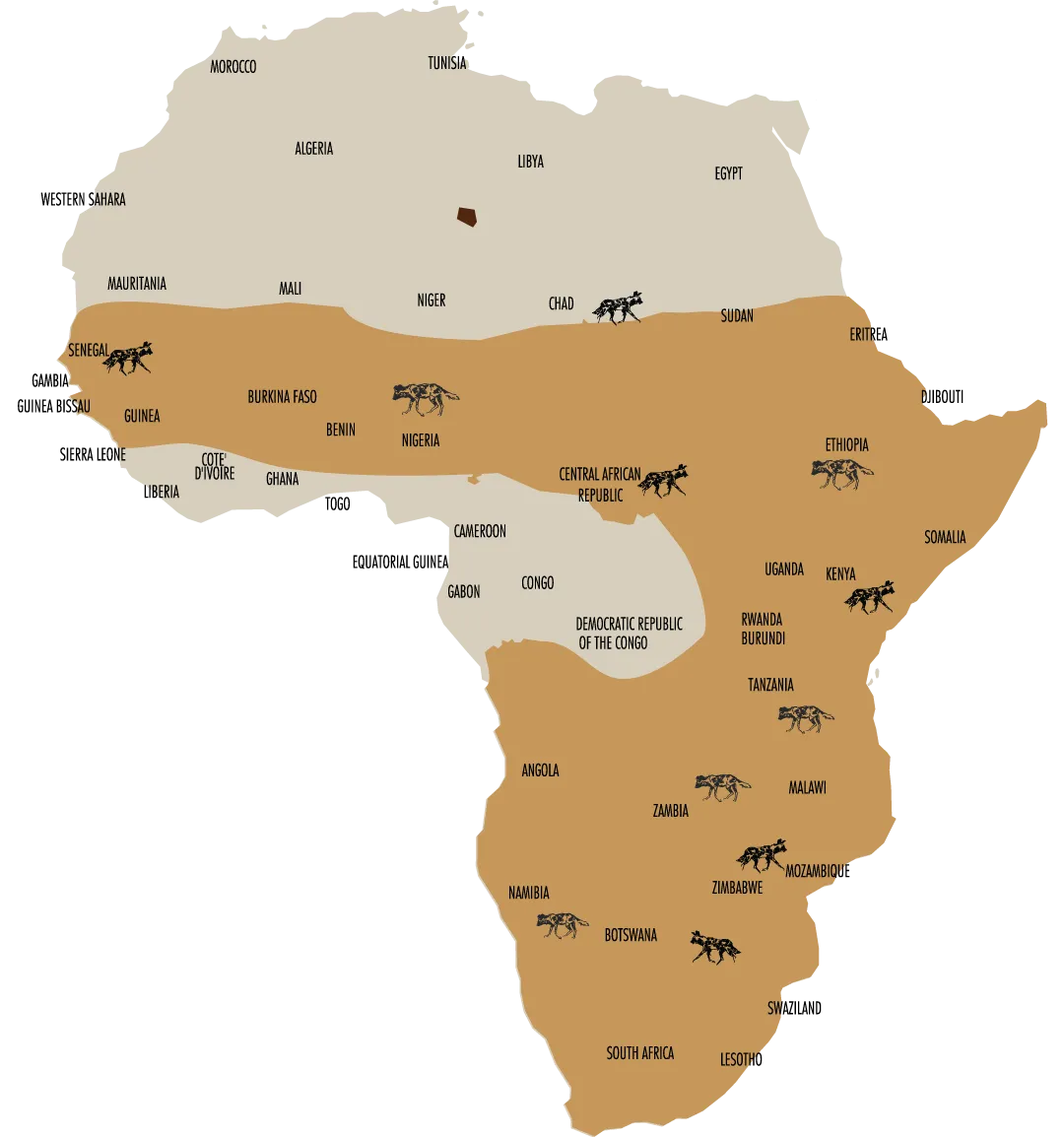
Historical range of African wild dogs
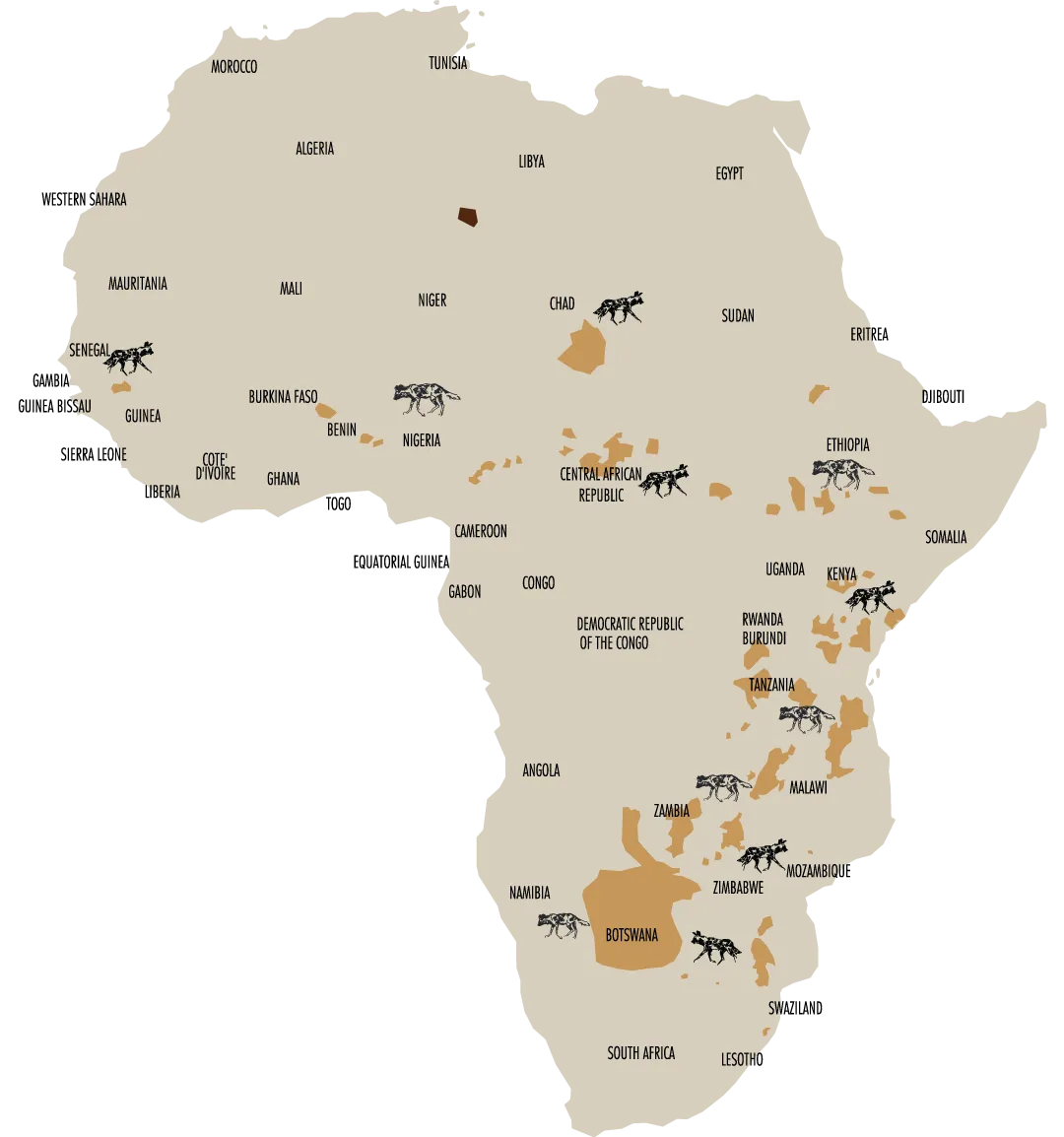
Present day range
Estimated number of painted wolves left in the world
%
Success rates for painted wolf hunts
Average number of pups born to a pack each year
What's in a Name
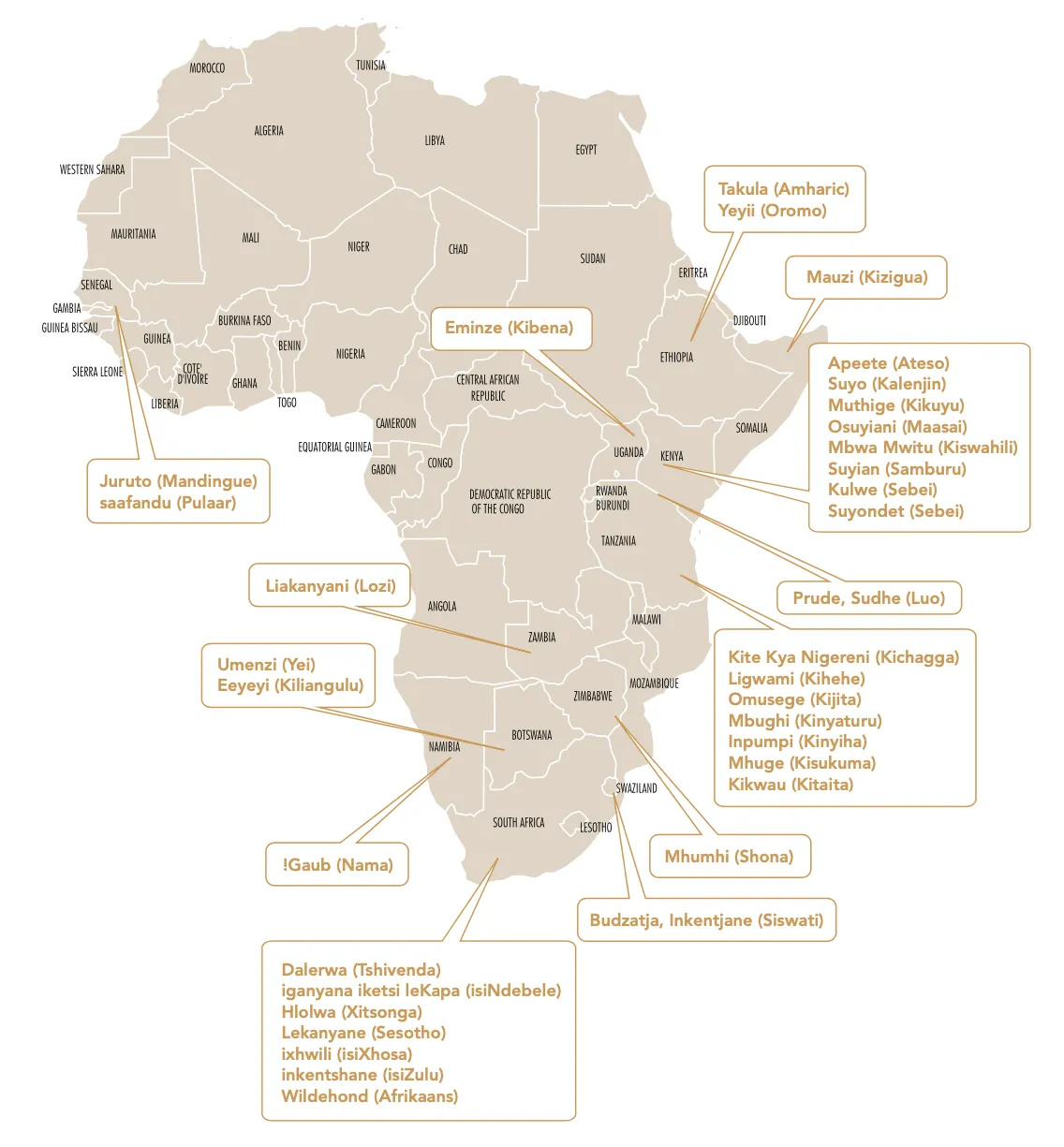
There has been controversy about the use of the name African wild dog because it is thought by some to have negative connotations. These amazing carnivores have long be vilified as vermin, and conservationists would prefer a more positive term. Following the popular BBC series "Dynasties" in 2018, the name Painted Wolf has gained traction.
In English they have been known as African wild dog (most common usage), Cape hunting dog, painted hunting dog (favoured by Greg Rasmussen), painted dog, Painted Wolf, and tri-coloured dog.
This map illustrates the names given to Painted Wolves in some of the many languages of Africa.